Life on Mars: Evidence, Discoveries & the Ongoing Scientific Debate
The question of whether life exists—or once existed—on Mars is one of the most important scientific questions humanity has ever asked. For decades, Mars has captured our imagination as a potentially habitable world.
Modern science has replaced speculation with data, and while no definitive proof of life has been found, the evidence continues to grow more intriguing.
Why Scientists Search for Life on Mars
Mars is the most Earth-like planet in our solar system. Geological evidence shows that billions of years ago, Mars had liquid water, a thicker atmosphere, and a stable climate—conditions known to support life on Earth.
Understanding whether Mars ever hosted life helps scientists understand how common life might be in the universe.
Ancient Water on Mars
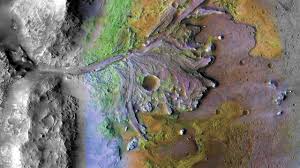
Orbital images and rover data reveal dried riverbeds, lake basins, and minerals that only form in water. These discoveries strongly suggest Mars once had a global water cycle.
Water is considered essential for life, making these findings foundational to the search.
Organic Molecules and Chemical Evidence
NASA’s Curiosity and Perseverance rovers have detected organic molecules in Martian rocks. While organic molecules are not proof of life, they are the building blocks of biology.
These compounds could originate from biological or non-biological processes, which fuels ongoing debate.
The Methane Mystery
One of the most controversial findings is the detection of methane in Mars’ atmosphere. On Earth, most methane is produced by living organisms.
Mars shows seasonal spikes of methane, but scientists have not yet determined whether the source is biological or geological.
Fossilized Microbial Life?
Some scientists believe ancient microbial fossils could be preserved in Martian rocks, especially in former lake beds like Jezero Crater.
However, interpreting such features is extremely difficult, as non-living processes can produce similar structures.
Why Proof Is So Difficult
Mars is hostile today: intense radiation, extreme cold, and a thin atmosphere destroy organic material over time. Any evidence of ancient life would be subtle and deeply buried.
This is why returning samples to Earth is considered essential.
The Role of Mars Sample Return
The Mars Sample Return mission aims to bring Martian rock samples back to Earth, where they can be studied with far greater precision.
This could finally answer whether Mars ever hosted microbial life.
Scientific Skepticism and Debate
Extraordinary claims require extraordinary evidence. Scientists remain cautious, avoiding premature conclusions until data is rigorously verified.
This skepticism ensures scientific integrity but can frustrate the public.
What Would Life on Mars Mean?
Discovering life on Mars would transform biology, philosophy, and our understanding of humanity’s place in the universe.
It would suggest life may be common wherever conditions allow.
Final Thoughts
The search for life on Mars is ongoing. While definitive proof remains elusive, each mission brings us closer to answering one of humanity’s oldest questions: Are we alone?