Published: January 26, 2026
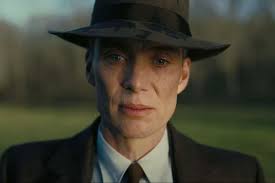
Christopher Nolan’s Oppenheimer is not just a biographical film — it is a psychological portrait of ambition, guilt, and consequence. Instead of focusing on spectacle, Nolan builds a dense, dialogue-driven narrative that examines how a single mind helped change the course of human history.
This spoiler-free review looks at the film’s structure, performances, technical craft, and whether its three-hour runtime earns its place among the great historical dramas.
A narrative built on tension, not explosions
Despite its subject matter, Oppenheimer is not a conventional war film. The tension comes from conversations, ethical debates, and political maneuvering rather than action sequences. Nolan structures the film as a layered investigation into memory, reputation, and legacy.
Why it works: the film trusts dialogue and performance to carry weight, resisting the urge to simplify complex history.
Performances: Cillian Murphy’s defining role
Cillian Murphy delivers a career-best performance as J. Robert Oppenheimer. He captures both intellectual brilliance and emotional fragility, making the character feel human rather than mythic.
Robert Downey Jr. provides a subtle, controlled counterpoint, and the ensemble cast elevates even minor scenes with sharp, precise acting.
Sound, editing, and visual language
Nolan’s use of sound design and rapid cross-cutting creates a sense of inevitability. The film rarely pauses, building pressure through rhythm rather than spectacle.
Strengths and limitations
The film’s density is both its greatest strength and its biggest barrier. Viewers unfamiliar with the historical context may find the pacing demanding, and the structure requires close attention throughout.
This is a film designed for focused viewing, not casual watching.
Final verdict
Oppenheimer stands as one of Nolan’s most mature works — intellectually challenging, emotionally heavy, and formally daring. It may not be his most entertaining film, but it is arguably his most important.
Rating: 4.5 / 5