NASA’s Perseverance Rover on Mars: Mission, Discoveries & Why It Matters
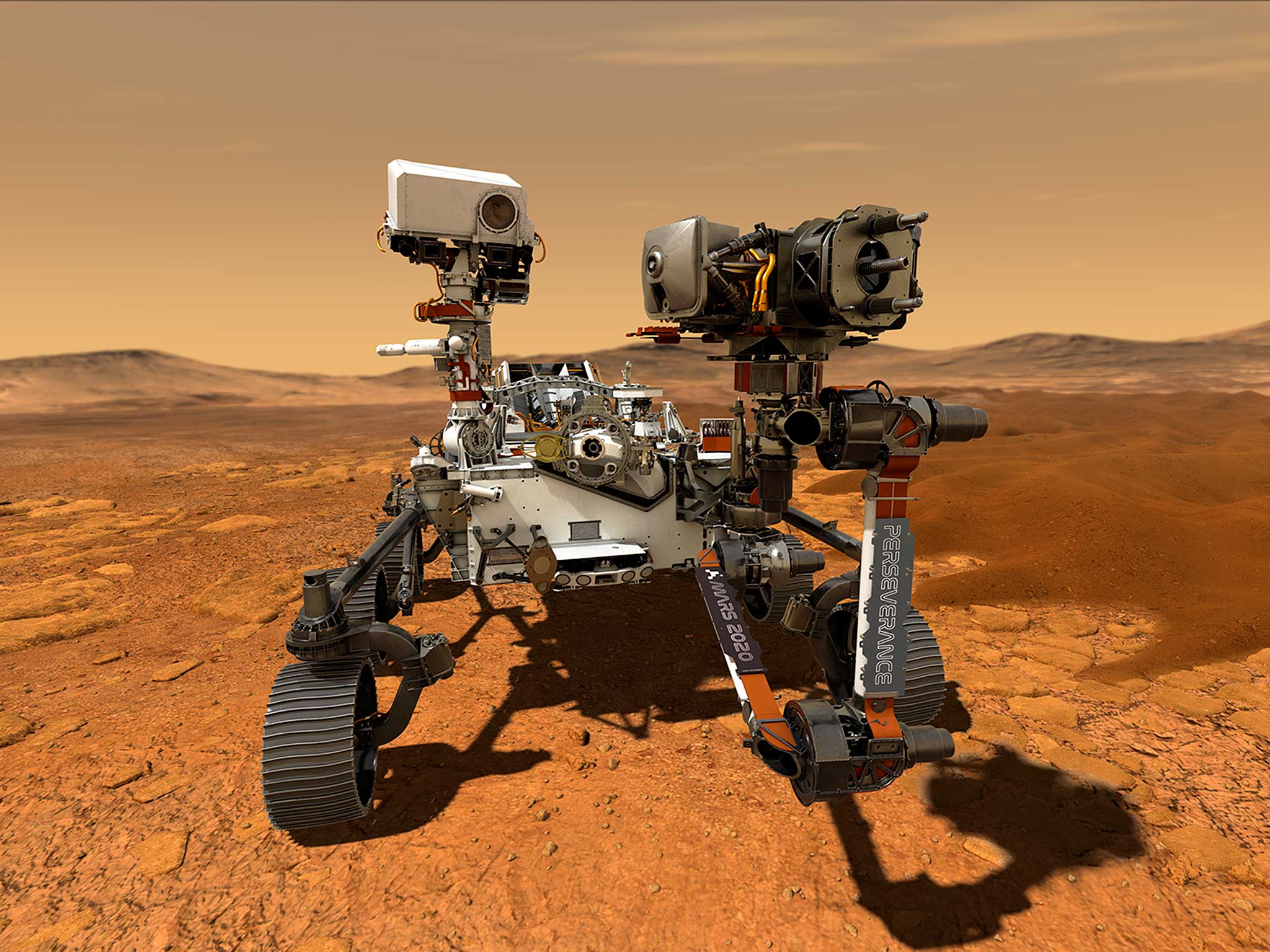
NASA’s Perseverance rover represents one of the most ambitious robotic missions ever sent to another planet. Landing on Mars in February 2021, Perseverance was designed not just to explore — but to fundamentally change how humanity studies the Red Planet.
Unlike previous rovers, Perseverance is focused on astrobiology: the search for signs of ancient microbial life. Its mission is deeply connected to the long-term goal of bringing Martian samples back to Earth.
What Is the Perseverance Rover?
Perseverance is a car-sized robotic rover developed by NASA’s Jet Propulsion Laboratory. It is part of the Mars 2020 mission and builds upon the legacy of earlier rovers like Spirit, Opportunity, and Curiosity.
At its core, Perseverance is a mobile scientific laboratory equipped with advanced cameras, spectrometers, drills, and autonomous navigation systems.
Why Was Perseverance Sent to Jezero Crater?
Jezero Crater was chosen because scientists believe it once held a vast lake billions of years ago. Ancient river deltas and sediment deposits in the crater make it one of the best places on Mars to search for preserved biosignatures.
If microbial life ever existed on Mars, Jezero Crater offers the highest chance of finding physical evidence.
Key Mission Objectives
- Search for signs of ancient microbial life
- Study Mars’ climate and geology
- Collect and cache rock samples
- Demonstrate new technologies for future missions
Advanced Technology Onboard Perseverance
Perseverance carries the most sophisticated scientific instruments ever placed on a Mars rover. These include SHERLOC and PIXL, which analyze chemical composition at microscopic scales.
The rover also features enhanced autonomous navigation, allowing it to drive farther and faster with less reliance on Earth-based commands.
The Ingenuity Helicopter Experiment
One of Perseverance’s most historic contributions was carrying the Ingenuity helicopter. Ingenuity became the first powered aircraft to fly on another planet.
Originally designed as a short technology demonstration, Ingenuity far exceeded expectations and proved that aerial exploration on Mars is possible.
Sample Collection and the Mars Sample Return Mission
Perseverance is collecting rock and soil samples and sealing them in special tubes. These samples are intended to be retrieved by a future joint NASA-ESA Mars Sample Return mission.
Bringing Martian material back to Earth would allow scientists to study it with laboratory equipment far more powerful than anything that can be sent to Mars.
Major Discoveries So Far
Perseverance has identified organic molecules, studied sediment layers, and provided strong evidence that Mars once had environments capable of supporting life.
While no direct proof of life has been found yet, the data collected has significantly strengthened the scientific case for Mars’ habitability in the distant past.
Why Perseverance Matters for Human Exploration
Beyond science, Perseverance is testing technologies essential for future human missions. These include MOXIE, an experiment that successfully produced oxygen from the Martian atmosphere.
Such technology could one day allow astronauts to generate breathable air and rocket fuel on Mars.
What Comes Next?
Perseverance’s mission will continue for many years, working in tandem with orbiters and future landers. Its discoveries will guide landing site selection and mission planning for eventual human exploration.
Final Thoughts
NASA’s Perseverance rover is not just exploring Mars — it is laying the groundwork for humanity’s next giant leap. Whether through discovering ancient life or enabling human missions, Perseverance is reshaping our understanding of what is possible beyond Earth.
How Perseverance Leads to Mars Sample Return
Perseverance is not working alone. One of its most important roles is collecting and sealing Martian rock samples for a future return to Earth. These samples are intended to be retrieved by the ambitious Mars Sample Return mission, a joint effort between NASA and ESA that could revolutionize planetary science.